
Reclaim Your Backyard: A Homeowner's Guide to Solving Drainage Issues
There’s nothing more frustrating than looking out at your yard after a heavy rain only to see puddles that refuse to disappear. A soggy, muddy backyard is more than just an inconvenience; it keeps your family and pets inside, damages your lawn, and can even pose a threat to your home’s foundation. Here in London, our often-dense clay soil can make proper drainage a real challenge. While you can wait for the sun to do its work, a lasting solution is often found in professional landscaping. If you're tired of your yard feeling more like a swamp, this guide will walk you through the common causes of poor drainage and the effective, long-term solutions that can transform your outdoor space.
The Root of the Problem: Why Your Yard Stays Soggy
Understanding why water is pooling in your yard is the first step toward fixing it. While a major downpour can saturate any lawn temporarily, chronic sogginess usually points to an underlying issue. Here are a few of the most common culprits we see:
-
Improper Grading: This is the number one cause of backyard drainage problems. Ideally, your property should have a gentle slope that directs water away from your house's foundation and towards a suitable drainage point like the street. If your yard is perfectly flat or, worse, slopes towards your home, water has nowhere to go and will collect in the lowest spots.
-
Compacted Soil: Over time, soil can become heavily compacted from foot traffic, lawnmowers, or even leftover debris from home construction. Clay soil, which is common in our region, is particularly prone to compaction. When soil is too dense, water can't penetrate it, so it sits on the surface instead.
-
Misdirected Downspouts: Your home's eavestroughs and downspouts collect a massive amount of water from the roof. If your downspouts empty directly at the base of your foundation, you're concentrating all that water in the worst possible place. This can quickly lead to oversaturated soil and put your basement at risk.
More Than Just Mud: The Hidden Dangers of Poor Drainage
Ignoring persistent water issues can lead to more significant problems that affect both your property's health and value. A waterlogged yard isn't just messy; it's a sign of an unhealthy environment that can have cascading effects.
First, your lawn and plants will suffer. Grass roots can't survive in waterlogged soil, leading to root rot, fungal diseases, and ugly, patchy brown spots. This creates a frustrating cycle where your efforts to maintain a beautiful lawn are constantly undermined by poor drainage.
More seriously, constant moisture against your home's foundation can be incredibly destructive. Water pressure can lead to cracks in the concrete, creating pathways for leaks into your basement or crawlspace. This kind of water damage is expensive to repair and can compromise your home's structural integrity.
Finally, a soggy yard is simply unusable. It becomes a breeding ground for mosquitoes and other pests, and you can't enjoy the space for playing, gardening, or relaxing without getting covered in mud. This significantly reduces your property's functional living area and overall appeal.
From Swamp to Sanctuary: Professional Landscaping Solutions
Fortunately, you don't have to live with a soggy yard forever. A professional landscaping approach can permanently solve drainage issues by addressing the root cause and reshaping your property for optimal water flow.
1. Corrective Grading: The most effective solution often starts with re-grading. This process involves carefully reshaping the land to create that essential, gentle slope away from your home. A professional team can ensure the grade is correct to guide water effectively without causing erosion. This foundational step is a core part of our landscaping services.
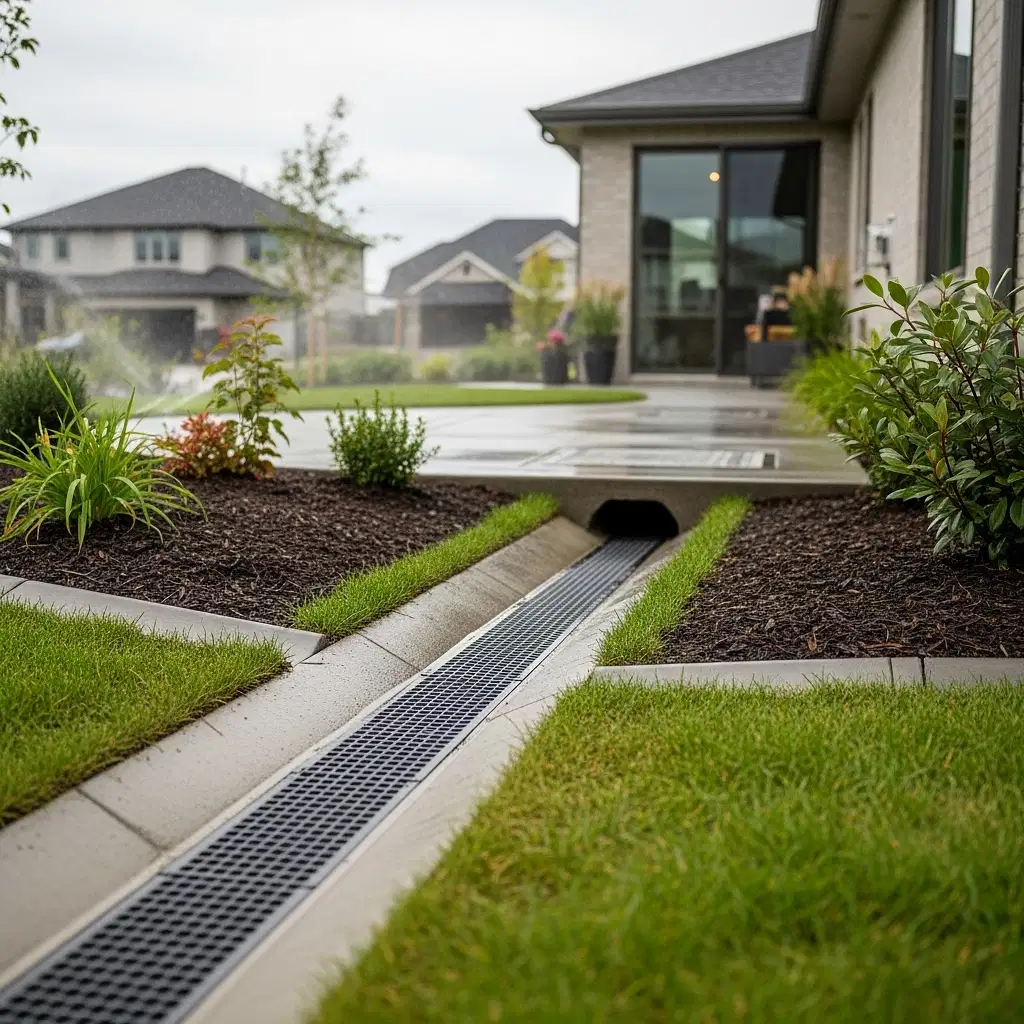
2. Installing Drainage Systems: For more severe issues, a subsurface drainage system may be necessary. A French drain, for example, is a perforated pipe placed in a gravel-filled trench that collects and channels groundwater away from problem areas. Catch basins can also be installed in low spots to collect surface water and pipe it away.
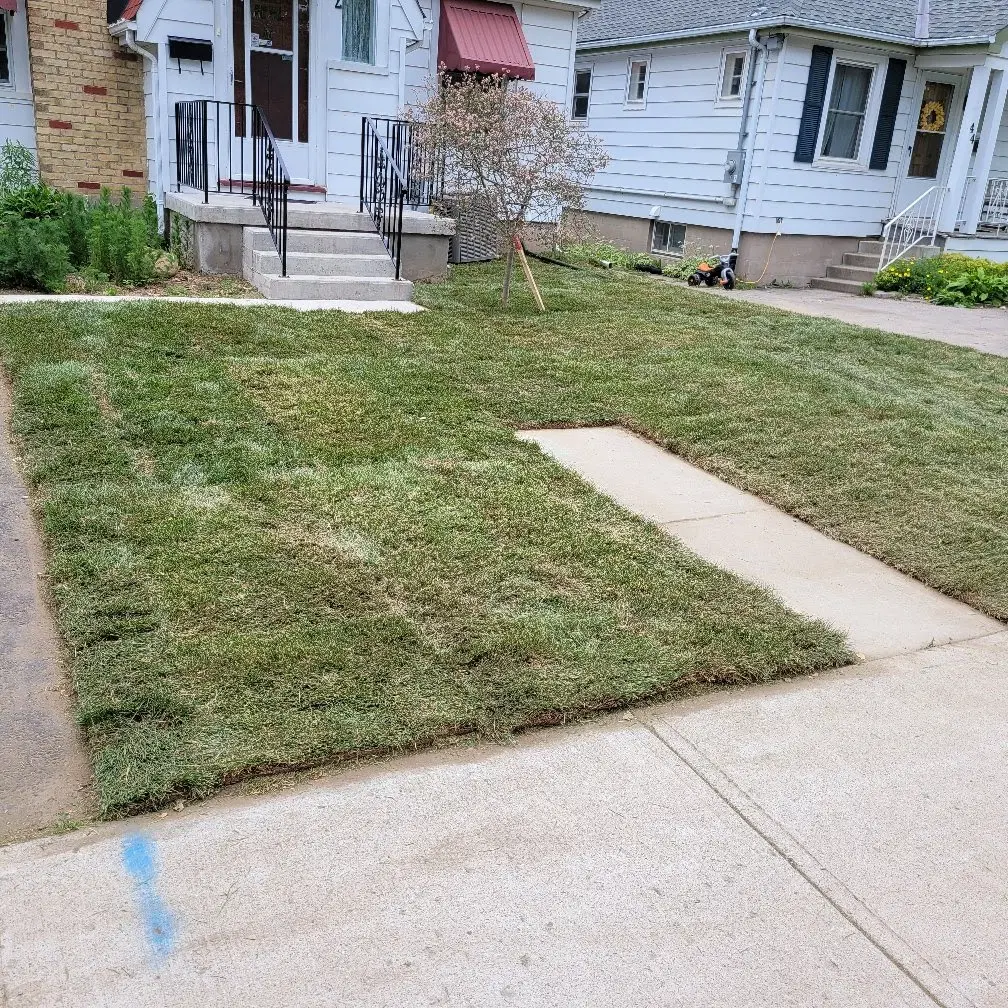
3. Professional Sod Installation: Once the grading and drainage are corrected, the final step is to restore your lawn. Laying down high-quality sod on a layer of fresh, nutrient-rich topsoil gives you an instantly beautiful and healthy lawn. A new lawn on properly prepared ground will establish strong roots and be far more resilient to stress. Learn more about our sod installation process.
These solutions work together to not only fix your soggy yard but also to create a healthier, more sustainable landscape for years to come.
Don't Forget Your Driveway
Poor drainage doesn't just impact your lawn; it can also wreak havoc on your hard surfaces. Water that pools on or near your driveway can seep into small cracks. During the winter, this water freezes and expands, turning tiny cracks into significant potholes and fissures. Over time, this freeze-thaw cycle can destroy your asphalt. Ensuring water is channeled away from your driveway is just as important as protecting your lawn. If you've already noticed damage, addressing it promptly with professional asphalt repair can prevent more costly replacements down the road.
Take the First Step to a Drier Yard
A soggy backyard is a problem you don't have to live with. By addressing the core issues of grading and water management, you can protect your home, improve your lawn's health, and finally get the beautiful, usable outdoor space you deserve. It's about creating a landscape that works with our local environment, not against it.
If you're ready to solve the drainage problems at your London property for good, Castillo Landscaping is here to help. Contact us today for a consultation. We’ll assess your yard and recommend the right combination of professional landscaping and sod installation services to reclaim your backyard.